
Director: Timashion Jones – narrated by Wendell Pierce, has its world premiere at DOC NYC https://www.docnyc.net/film/and-damn-he-could-play-the-marcus-belgrave-story/ – on Friday, November 13 (7pm, Village East by Angelika).
By Thierry De Clemensat
Member, Jazz Journalists Association
Editor-in-Chief, Bayou Blue Radio
Correspondent – Paris-Move / ABS Magazine
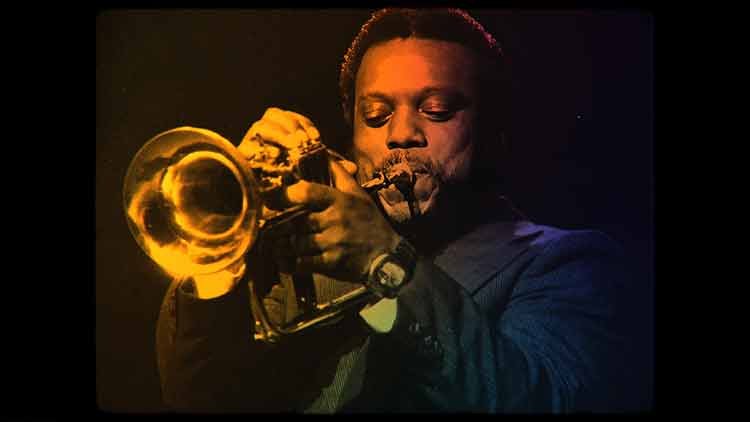
Note: A second screening is scheduled for Saturday, November 14, at 1:00 p.m., and the film will also be available online until November 29. Both screenings will be followed by discussions with the audience; Joan Belgrave, Marcus’s widow, will join director Timashion Jones for the Saturday session.
Marcus Belgrave, Detroit and the Living Memory of Jaz
Sometimes, the unexpected turns of a life begin to make sense only in retrospect. I may not be the journalist best qualified to write about this film. As a European, I inevitably lack some of the cultural knowledge that Americans acquire through their school and university years, that intimate familiarity with a history that, on the other side of the Atlantic, often serves as an almost instinctive frame of reference. But that hardly matters. Music has never been particularly respectful of borders. I have seen Marcus Belgrave’s name countless times on album covers, a familiar presence, a face whose contours I recognized without necessarily knowing the full story behind it. There is something in that musical memory that connects me to this artist, beginning with the day, when I was barely knee-high, that I heard him sing “Georgia.” That was it. My fate was sealed. I had no idea then that I would become a journalist, much less that life would eventually bring me to a film devoted to this extraordinary musician. Yet some encounters, even those separated by decades, have a way of asserting themselves with an almost uncanny sense of inevitability.
Marcus Belgrave belongs to that rare category of musicians whose lives seem to contain a substantial portion of 20th-century American history. Born in Pennsylvania in 1936 and influenced early on by Clifford Brown, he joined Ray Charles’s orchestra in the late 1950s before settling in Detroit in 1963. There, he became one of the musicians associated with Motown, contributing to some of the most memorable recordings in American popular music. Stevie Wonder, Marvin Gaye, Smokey Robinson, Martha and the Vandellas: The names alone speak volumes about the importance of that era. Yet to define Belgrave solely through his Motown work would be to miss the larger story. He could have pursued an international career with major touring ensembles and prestigious recording studios. Instead, he chose Detroit, its musical community, its younger musicians and a particular understanding of what it means to pass a tradition along. He became one of those artists whose influence is measured not only by what they played, but also by what they made possible for others. The stakes, then, are considerable. And when cinema takes on a life such as his, it assumes a responsibility that goes well beyond the conventions of the musical biography.
The film builds on a historical and literary undertaking for which Mark Stryker’s book Jazz from Detroit has become an essential reference. Its ambition is not simply to recount the life of a trumpeter, but to recover an environment, a collective history, a way of inhabiting music. Detroit is not merely the backdrop to Belgrave’s story, much less a location noted in passing in an artist’s biography. The city is a character in its own right, a force that shapes careers, sensibilities and solidarities. The contributions of Elvin Jones, Yusef Lateef, Ron Carter, Kenny Garrett, Regina Carter and Christian McBride place Belgrave within a musical lineage whose reach extends well beyond Michigan. What emerges is also an opportunity to understand how an industrial city, shaped by economic upheaval, racial tensions and the struggle for civil rights, became one of the most fertile centers of American musical creativity.
I start the film. Black-and-white images unfold across the screen: Detroit, its streets, its musicians, its faces. I settle in, keyboard at hand, ready to take notes. Then color gradually enters the picture, as though the present were beginning to emerge from the archives. The device might seem familiar, even conventional, but it works remarkably well. There is something fundamentally right about this way of bringing an era back to life without trapping it in nostalgia. Memory is not a museum in which we come to contemplate the remains of a vanished greatness. It is a living substance, animated by voices, gestures and sounds. And running beneath the surface is another story, one connected to the civil rights movement, in which music becomes a space for affirmation, resistance and freedom.
Timashion Jones’s direction impresses with its sense of rhythm and its ability to move between images and testimony without ever losing sight of its subject. The sequences unfold with an energy that, in certain respects, recalls Belgrave’s own music. The editing is sharp and often incisive, moving through associations, abrupt transitions and accelerations before allowing the film to settle into more contemplative passages. The interviews never feel like a mere accumulation of memories. Each voice contributes a nuance, a perspective, another piece of a puzzle whose larger coherence gradually comes into view. The beauty of the images, the precision of the editing and the care devoted to the sound design all contribute to the film’s overall impact. It has a genuine sense of breath and movement, a pulse that keeps the viewer engaged without sacrificing the substance of its argument.
Then Don Was appears. The musician and producer, whose career is deeply intertwined with Detroit’s musical history, speaks about Marcus Belgrave with a passion that is impossible to mistake. There is something in his testimony that goes beyond professional admiration. One begins to understand that Belgrave was the kind of person whose presence could permanently alter the environment around him, whose generosity and high standards became touchstones for those fortunate enough to know him. Pat Metheny appears next. Rodney Whitaker, whom I have written about before, brings another dimension to the story. These testimonies do more than celebrate a musician who is no longer with us. They allow us to measure the depth of his influence and to see how it continues to manifest itself in the work of musicians from different generations.
This is precisely where the film finds one of its greatest strengths. It does not try to impose Marcus Belgrave’s importance on the viewer. It allows that importance to emerge through the people who knew him, worked with him and learned from him. The accumulation of testimonials could easily have produced an atmosphere of reverence, an audiovisual monument whose commemorative purpose would ultimately overwhelm the individuality of its subject. But the film largely avoids that trap. Instead, it lets the voices, memories and anecdotes speak for themselves, leaving viewers to discover the connections between the various lives represented. The result is all the more convincing because Belgrave is never reduced to an abstract symbol of musical greatness. He remains a man, with his own character, choices, commitments and particular understanding of his craft.
I also find myself reunited with Charles McPherson, whom I saw perform just two or three weeks ago at Monk’s Jazz Club in Austin, Texas. A coincidence of this kind gives the documentary an almost intimate dimension. The viewer is no longer simply watching a succession of images and interviews. There is a sense of encountering familiar faces, of entering a small musical family whose bonds have been forged over decades. The film manages to create this feeling of closeness without ever forcing it, and that is one of its most affecting achievements. It reminds us that jazz is also a history of encounters, loyalties and conversations that continue long after musicians have left the stage.
But what truly fascinates me, beyond these personal reunions, is the film’s ability to place Marcus Belgrave within a much larger history. Detroit cannot be understood without its automobile industry, the transformations of its social fabric or the African American migrations that helped shape its identity. The city’s years of prosperity fostered the emergence of a Black middle class, a remarkably rich nightlife and educational institutions whose music programs played a significant role. Schools, clubs, associations, workshops and rehearsal spaces formed a genuine ecosystem. Jazz was not simply music to be heard. It was a practice, a discipline, a way of building an identity and establishing one’s place within a community.
Detroit gave rise to or nurtured such essential figures as Hank Jones, Thad Jones, Elvin Jones, Barry Harris, Yusef Lateef, Donald Byrd, Tommy Flanagan, Kenny Burrell, Ron Carter and Joe Henderson. This concentration of talent was no spontaneous occurrence. It was the result of social, cultural and economic conditions that encouraged the circulation of musical knowledge. In Detroit, tradition was inseparable from transmission. One musician learned from another, watched his gestures, listened to his phrases, absorbed his language before attempting to transform it. That continuity allowed Detroit to retain a considerable influence even as its economic circumstances gradually deteriorated.
Marcus Belgrave’s story takes on a particular significance in this context. His arrival in Detroit coincided with a period of profound change. The racial tensions that would culminate in the 1967 uprising were intensifying, while the automobile industry was beginning to undergo transformations whose consequences would be felt for decades. Motown, which had helped make Detroit one of the capitals of American popular music, eventually moved much of its operation to California. Musicians who had found steady employment in the studios were forced to reconsider their futures. Many left. Belgrave stayed. What might appear to be a minor detail in a biography becomes the starting point for another story: that of a man who refused to separate his career from the community that had welcomed him.
This is where the documentary acquires greater depth. It does not present Belgrave’s decision as a mere personal anecdote, but as an act reflecting a particular understanding of artistic responsibility. In a city where cultural institutions were under pressure, opportunities were shrinking and musicians had to devise new forms of solidarity, passing knowledge along became both a necessity and a conviction. Belgrave took part in educational initiatives, mentored younger instrumentalists and helped sustain a musical scene whose future was never assured. His commitment belonged to a broader tradition of collectives and independent organizations that enabled Detroit artists to continue creating outside the dominant commercial circuits.
The work of Tribe and Strata, musicians’ workshops, cooperatives and independent creative spaces all reflected a determination to take control of one’s own destiny. The goal was not simply to make records or organize concerts, but to build structures capable of preserving artistic independence and allowing voices to be heard that the music industry did not always consider a priority. From this perspective, Belgrave emerges as an essential figure in a history that cannot be reduced to major record labels or the most heavily publicized names in jazz. He represents another dimension of artistic creation: the work of maintaining the conditions that make renewal possible.
The film could have rested on this story alone, which is already rich enough to justify a documentary. But it goes further, reminding us that Detroit’s music cannot be confined to a single aesthetic. Jazz, rhythm and blues, soul, gospel and, later, electronic music have maintained constant relationships, sometimes underground, sometimes unmistakable. The boundaries between these genres have never been as impermeable as commercial categories would have us believe. Marcus Belgrave’s career embodies this circulation. His work with Ray Charles, his collaborations with major jazz figures, his participation in Motown recordings and his commitment to Detroit’s independent scene form a trajectory that resists rigid classification.
The appearance of Dorothy Ashby, even in a brief passage, strikes me as particularly significant. The harpist, also deeply connected to Detroit, reminds us how the city produced artists whose instrumental choices and aesthetic explorations expanded the possibilities of jazz. The harp, an instrument often associated with musical worlds far removed from modern jazz, became in her hands a territory for exploration. That singularity is not unrelated to Detroit’s spirit: a city where musicians have continually sought to move beyond the limits imposed by traditions, institutions and categories.
I am always drawn to films that achieve this kind of depth, in which the musical and historical narratives do not merely coexist but converge with an almost natural sense of purpose. This is one of the documentary’s major achievements. It does not ask us to choose between the story of a man and that of a city, between the beauty of a musical language and the social conditions that made it possible. On the contrary, it reminds us that these dimensions are inseparable. Music does not emerge in a vacuum. It is the product of an era, an environment, encounters, conflicts and solidarities. In turn, it helps transform that environment, giving it an identity and preserving its memory.
The direction also knows how to make room for reflection. The archival footage is not simply illustrative material meant to accompany the interviews. It contributes to the construction of the narrative, bringing forth faces, places and atmospheres that help us understand what is being said. The editing is intelligent enough to prepare viewers for longer sequences, for conversations that take the time to develop an idea. The alternation between the vitality of the images and the depth of the testimony gives the film a genuine momentum. There are no dead spots, but neither is there the kind of breathless pacing that sometimes characterizes contemporary music documentaries, so eager to maintain immediate attention that they sacrifice reflection.
Gradually, another way of telling the history of jazz begins to emerge. A history not exclusively concerned with great soloists, recorded masterpieces or stylistic innovations, but also with the men and women who made it possible for this music to be passed on. Marcus Belgrave belongs to that category of artists whose contributions have sometimes been insufficiently recognized precisely because their importance cannot be measured solely through individual fame. His influence can be heard in the playing of his students, in their approach to music, their relationship with the stage and their understanding of the profession. Geri Allen, Kenny Garrett, Regina Carter, James Carter, Robert Hurst and Rodney Whitaker are not simply a list of distinguished musicians. They testify to the vitality of Belgrave’s teaching and to the ability of a tradition to renew itself.
It is also worth remembering that Belgrave himself was a remarkably versatile musician. His journey, from his early professional experiences to his collaborations with major jazz figures, reflects an instrumental mastery and musical intelligence that allowed him to move between very different worlds. His playing could be incisive, warm, lyrical or daring without ever losing the distinctive sound that made him immediately recognizable. He was not merely an accomplished studio musician, capable of meeting the demands of a recording session. He was an improviser whose personality emerged fully whenever he spoke through his trumpet. This duality, between collective work and individual expression, is one of the keys to understanding his career.
And then there is the human dimension, which the film captures with particular sensitivity. Belgrave did not make his career an instrument of self-promotion. He chose instead to devote a substantial part of his life to those who came after him. In a musical world where competition, recognition and visibility can become decisive concerns, that choice deserves consideration. This is not about artificially opposing individual ambition to collective solidarity, but about recognizing that another definition of success is possible. An artist’s greatness is measured not only by the place he occupies in the history books, but also by what he leaves behind and by the ways in which he has helped make the future possible for others.
Perhaps that is what makes this film so engaging. It does not seek to manufacture another legend, but to recover a history whose significance extends far beyond the conventions of a tribute. It invites us to consider how we construct the memory of music, and to think about those artists whose names sometimes remain less familiar than those of the musicians they accompanied, taught or inspired. It reminds us that the history of jazz cannot be understood without acknowledging these essential figures, whose influence was felt in recording studios, concert halls, schools and workshops. Marcus Belgrave is not a supporting character in the history of American music. He is one of the people who helped ensure its continuity.
I am almost ready to close my laptop, but I remain with that particular feeling a successful documentary can leave behind. There is something deeply reassuring about encountering musicians one has listened to for years, discovering stories one thought one already knew, and suddenly understanding the connections between seemingly distant lives. And although I have never lived in Detroit or experienced this history from the inside, the film has given me the keys to understanding it. It has not required me to possess every cultural reference necessary to appreciate its subject. It has simply invited me to listen, to look, to follow the voices and images, and to allow myself to be carried into a history whose common language is music.
For anyone who loves jazz, this documentary could quickly become a point of reference, not only for what it reveals about Marcus Belgrave, but also for the way it restores the depth of a musical tradition. It reminds us that Detroit remains one of the essential places in the history of jazz, that its contribution cannot be reduced to a handful of celebrated names, and that the passing of knowledge from one generation to the next is among the music’s most enduring strengths. It also reminds us that the most important artists are not always those who occupy the spotlight, but sometimes those who, working in the background, ensure that the light continues to travel.
Marcus Belgrave moved through 20th-century America, leaving his mark on popular music, jazz and several generations of musicians. His story, as cinema now brings it back to us, is that of a man who transformed talent into responsibility, experience into teaching, and his attachment to Detroit into a genuine philosophy of life. There is something in that trajectory that reaches beyond music itself. It reminds us that culture is never a fixed inheritance, but an ongoing story sustained by those who keep it alive. And when the final images fade, one truth remains: Marcus Belgrave did not simply play beautiful music. He helped ensure that others would be able to play it, too.
Vous pouvez également me demander un dernier travail éditorial ciblé : Proposer un titre plus incisif et un résumé SEO