
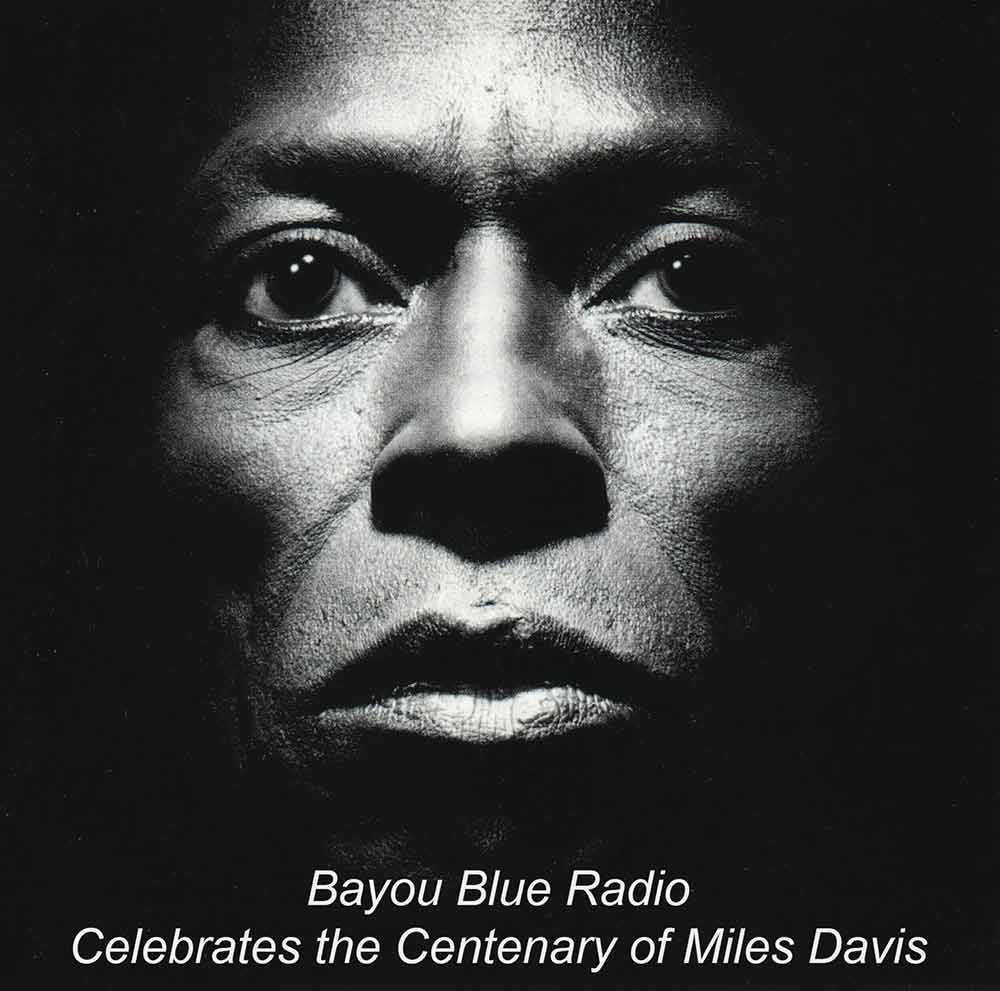
 Before the centenary essays, before the glossy photos and all those carefully ranked discographies, there was just a room, a record, and a sound I couldn’t really grasp, except I knew I’d never forget it.
Now, with the hundredth anniversary of Miles Davis, everyone’s stepping up to pay tribute. Critics lay out the usual turning points. Fresh takes on old arguments show up dressed as if they’re brand new. There’s this recent French book, Miles Davis – du BeBop au HipHop by Lucas Cechiari, that traces the path from bebop to hip-hop, covering his restless urge to keep moving and never get pinned down.
And sure, all that’s true. But honestly, it’s not the most interesting way to remember him.
For me, Miles starts somewhere else, on some afternoon from my childhood in a friend’s house. His parents owned the soundtrack to Ascenseur pour l’échafaud, a movie by Louis Malle I was way too young to see. But I got to hear the music: spare, nocturnal, full of tension and restraint. It didn’t shout; it lingered in the air and asked for your attention, but never demanded it.
At the time, I was slogging through solfège and cello at a conservatory. Jazz wasn’t part of the curriculum. No classes. No road map. No encouragement to improvise, not officially, anyway. Even so, something shifted. Not a conversion, but a recognition, a door opening onto a sound that felt so close and, at the same time, impossibly far away.
After that, Miles never really left. He was there on vinyl first, then through the cocoon of a Walkman. When CDs showed up in the ’80s, I switched without a second thought. I carried that sound across formats and years. Along the way, I found Weather Report and Spyro Gyra, groups that stretched the territory Miles had already carved out. For me, this was more than just listening; it was a way to orient myself in time and space, a way to understand possibility itself.
Miles didn’t just live in history. He reported from it. Every time the music changed, bebop, cool jazz, modal, fusion, it felt less like reinvention and more like dispatches from a front line you didn’t know existed yet.
Down the road, that private life of listening led, almost without me noticing, into a professional one. I started working in media, filming festivals, lots of jazz, often Miles himself.
From a distance, filming a show looks technical. Up close, it’s like improvising under pressure. Cameras need to anticipate what’s coming, not just react. You have to move with intention, stay sharp, and sometimes just disappear. Rehearsal isn’t a warmup; it’s a test.
The first time I filmed Davis, I remember the tension most. Not fear, exactly, just that awareness that everything mattered, that I had to be precise but unnoticed. After a string of test shots, I was by the monitor, watching the footage roll back in silence.
Suddenly, footsteps behind me. A hand on my shoulder.
I turned, and there he was, trumpet in hand, calm but massive, eyes flicking to the screen and back to me.
“Nice pictures, bro.”
That was it.
I stammered something in English. By the time I looked up, he’d already moved on.
Later, there’d be other small moments, a nod, a glance, one time he got the director to have me run a stage camera, right up close. That was the only time I really felt starstruck. Not because he was famous, but because he radiated something deeper. Call it internal gravity. Quiet authority. He shaped the room without having to try.
Still, it was never just about his presence. With Davis, it was all in the music.
He listened, really listened. Not just to the band, but to the world itself: its rhythms, tensions, silences. Every time he brought the horn to his lips, it sounded different. Nothing was ever a straight repeat. He played for the moment. I never heard him repeat himself.
The bigger the crowd, the more charged the air, the further out he’d go, stretching, twisting, leaving space where you’d expect sound. People call it mastery, but honestly, it’s more about focus. A rare kind of attention.
Europe always had a particular fascination with Miles, respect, even a kind of official embrace that the U.S. only sometimes matched. Modern musicians like Médéric Collignon still draw from that same deep energy. Davis’s influence here isn’t stuck in a museum; it’s alive, still morphing.
Sure, there are the classics, Kind of Blue gets mentioned again and again. But trying to sum up Miles with one album, or even one era, just misses the point. He never settled down, and his work won’t let you box it in.
He stretched beyond music, too. He painted, bold, abstract canvases, chasing the same ideas you could hear in his notes: space, contrast, tension. Most people can’t see the paintings today, but they show the same restless vision.
If you want a way in through film, Ascenseur pour l’échafaud is essential. The soundtrack isn’t just background; it’s Miles reimagining the movie as he plays. Then there’s the film Dingo—uneven, maybe, but it still catches that early-’80s moment: Davis, already walking the line between reality and legend.
Jazz and time have a weird relationship. The greats don’t fade, they refract. They show up again and again, in new shapes. Davis stands with giants like Nat King Cole, Duke Ellington, Oscar Peterson, artists who keep making sense, years after their time.
So now, a century on, the temptation grows: wrap up the story, decide where he belongs, put a period on the timeline. But Davis refuses that as much as he refused anything else so final.
The records are still here. The formats shift, the pictures fade.
And somewhere, a room like the one where all this started, somebody hears that sound for the first time: thin, searching, unfinished.
Still becoming.
Thierry De Clemensat
French journalist Based in Austin, Texas, Writes on Jazz, Culture and Global Society
Ascenceur pour l’echafaud Blueray, Movie
Miles Davis à 100 ans : le son qui n’a jamais cessé d’être
Avant les essais du centenaire, avant les photos glacées et ces discographies méticuleusement hiérarchisées, il n’y avait qu’une pièce, un disque, et un son que je ne savais pas vraiment saisir, sinon que je n’allais jamais l’oublier.
Aujourd’hui, à l’occasion du centième anniversaire de Miles Davis, chacun y va de son hommage. Les critiques déroulent les jalons habituels. De nouvelles lectures d’anciens débats surgissent, habillées comme si elles étaient inédites. Un livre français récent, Miles Davis – du BeBop au HipHop de Lucas Cechiari, retrace ce parcours du bebop au hip-hop, en insistant sur cette impulsion constante à avancer, à refuser toute assignation.
Tout cela est juste. Mais, à vrai dire, ce n’est pas la manière la plus intéressante de se souvenir de lui.
Pour moi, Miles commence ailleurs, un après-midi d’enfance, dans la maison d’un ami. Ses parents possédaient la bande originale d’Ascenseur pour l’échafaud, le film de Louis Malle que j’étais bien trop jeune pour voir. Mais j’ai entendu la musique: dépouillée, nocturne, tendue et retenue. Elle ne criait pas; elle flottait dans l’air, sollicitait l’attention sans jamais l’exiger.
À l’époque, je peinais à traverser le solfège et le violoncelle au conservatoire. Le jazz n’y avait pas sa place. Aucun cours. Aucun itinéraire. Aucune incitation à improviser, du moins officiellement. Et pourtant, quelque chose a basculé. Pas une conversion, plutôt une reconnaissance, comme une porte qui s’ouvre sur un son à la fois familier et infiniment lointain.
Dès lors, Miles ne m’a plus quitté. D’abord sur vinyle, puis dans le cocon d’un Walkman. Lorsque les CD sont apparus dans les années 1980, j’ai basculé sans hésiter. J’ai transporté ce son à travers les formats et les années. En chemin, j’ai découvert Weather Report et Spyro Gyra, des groupes qui prolongeaient un territoire que Miles avait déjà ouvert. Plus qu’une écoute, c’était une manière de m’orienter dans le temps et l’espace, une façon d’appréhender la possibilité elle-même.
Miles n’habitait pas seulement l’histoire. Il en rendait compte. À chaque mutation de la musique, bebop, cool jazz, modal, fusion, on avait moins le sentiment d’une réinvention que celui de dépêches venues d’une ligne de front dont on ignorait encore l’existence.
Avec le temps, cette vie d’écoute, intime, a glissé presque à mon insu vers une activité professionnelle. J’ai commencé à travailler dans les médias, à filmer des festivals, beaucoup de jazz, souvent Miles lui-même.
De loin, filmer un concert paraît technique. De près, cela tient de l’improvisation sous contrainte. Les caméras doivent anticiper, pas seulement réagir. Il faut se déplacer avec intention, rester en alerte, parfois savoir disparaître. La répétition n’est pas un échauffement, c’est une épreuve.
La première fois que j’ai filmé Davis, je me souviens surtout de la tension. Pas de la peur, plutôt la conscience aiguë que tout comptait, qu’il fallait être précis sans se faire remarquer. Après une série de prises d’essai, j’étais près du moniteur, regardant les images revenir en silence.
Soudain, des pas derrière moi. Une main sur mon épaule.
Je me retourne. Il est là, trompette à la main, calme mais imposant, le regard allant de l’écran à moi.
« Nice pictures, bro. »
C’était tout.
J’ai balbutié quelque chose en anglais. Quand j’ai relevé les yeux, il était déjà passé à autre chose.
Plus tard, il y a eu d’autres instants, un signe de tête, un regard, une fois où il a demandé au réalisateur de me faire monter une caméra de scène, au plus près. C’est la seule fois où j’ai vraiment été saisi. Non pas par sa célébrité, mais par ce qu’il dégageait de plus profond. Une gravité intérieure. Une autorité tranquille. Il façonnait l’espace sans effort.
Pourtant, il ne s’agissait jamais seulement de sa présence. Avec Davis, tout passait par la musique.
Il écoutait, vraiment. Pas seulement le groupe, mais le monde lui-même: ses rythmes, ses tensions, ses silences. Chaque fois qu’il portait la trompette à ses lèvres, le son changeait. Rien n’était jamais une simple répétition. Il jouait pour l’instant. Je ne l’ai jamais entendu se répéter.
Plus la foule était dense, plus l’air se chargeait, plus il s’aventurait loin, étirant, déformant, laissant du vide là où l’on attendait du son. On parle de maîtrise; c’est surtout une question d’attention. Une attention rare.
L’Europe a toujours entretenu avec Miles une fascination particulière, faite de respect, parfois d’une forme d’accueil institutionnel que les États-Unis n’ont offert qu’épisodiquement. Des musiciens contemporains comme Médéric Collignon continuent de puiser dans cette énergie profonde. Ici, l’influence de Davis n’est pas muséifiée; elle reste vivante, en mutation.
Bien sûr, il y a les classiques, Kind of Blue revient sans cesse. Mais vouloir résumer Miles à un album, ou même à une période, revient à passer à côté de l’essentiel. Il ne s’est jamais installé, et son œuvre refuse toute assignation.
Il a aussi débordé la musique. Il peignait, des toiles abstraites et audacieuses, poursuivant les mêmes idées que dans ses notes: l’espace, le contraste, la tension. Peu peuvent voir ces peintures aujourd’hui, mais elles témoignent de la même vision inquiète.
Pour entrer par le cinéma, Ascenseur pour l’échafaud s’impose. La bande-son n’est pas un simple décor; c’est Miles qui réinvente le film en jouant. Puis il y a Dingo, film inégal, peut-être, mais qui saisit ce moment du début des années 1980: Davis, déjà à la frontière entre réalité et légende.
Le jazz entretient avec le temps un rapport singulier. Les grands ne s’effacent pas, ils se diffractent. Ils réapparaissent, sous d’autres formes. Davis se tient aux côtés de figures comme Nat King Cole, Duke Ellington ou Oscar Peterson, des artistes qui continuent de faire sens bien après leur époque.
Alors, un siècle plus tard, la tentation est grande de clore le récit, de fixer sa place, de mettre un point final. Mais Davis s’y refuse, comme il s’est toujours refusé à toute forme de clôture.
Les disques sont toujours là. Les formats changent, les images s’estompent.
Et quelque part, dans une pièce semblable à celle où tout a commencé, quelqu’un entend ce son pour la première fois: mince, en quête, inachevé.
Encore en devenir.
Thierry De Clemensat
French journalist Based in Austin, Texas, Writes on Jazz, Culture and Global Society
Ascenceur pour l’echafaud Blueray, Movie