
Dr.ANTHONY BRANKER
Interview
By Thierry De Clemensat
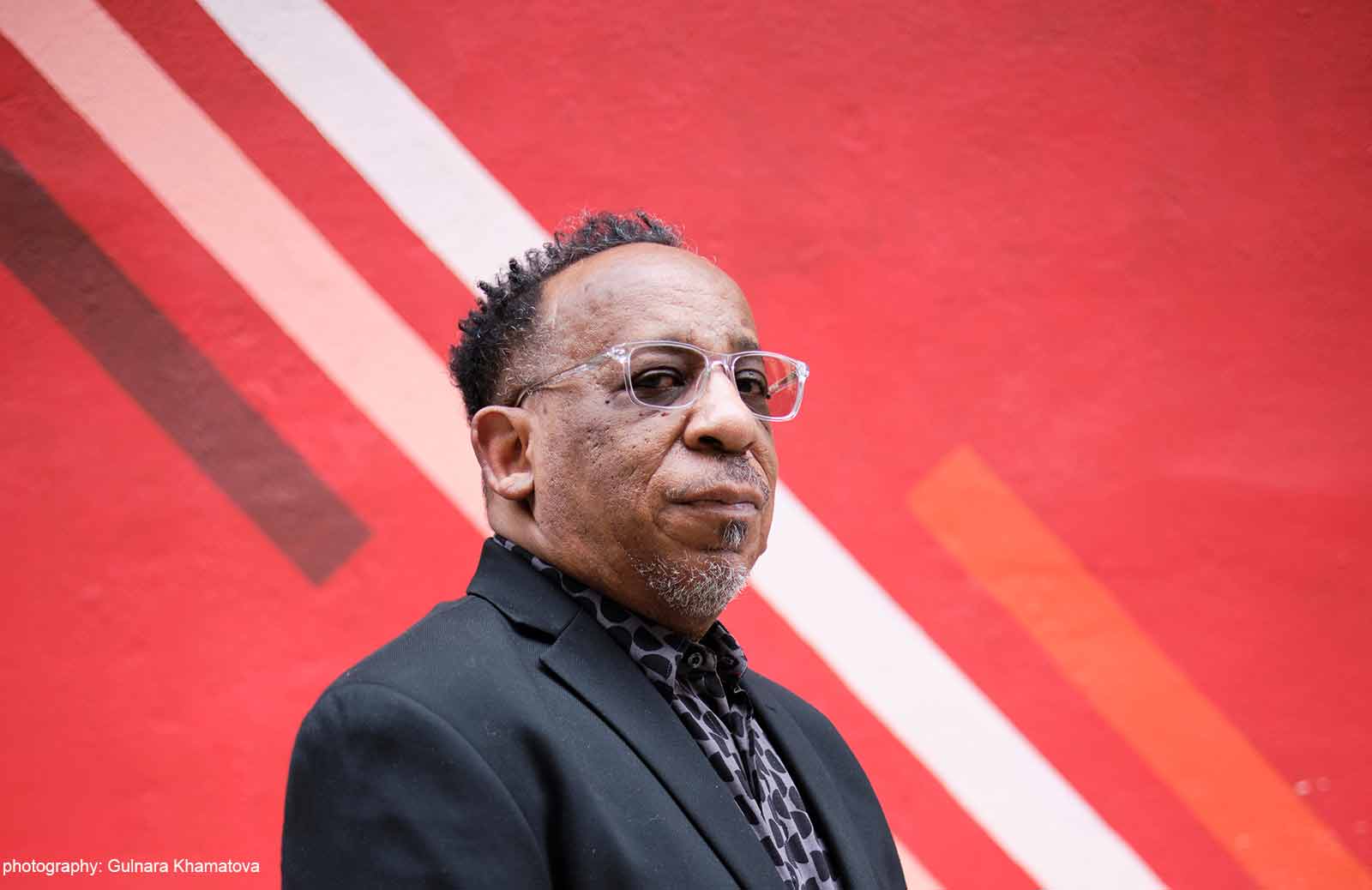
Few composers working in America today command the kind of quiet authority that Anthony Branker does. A composer of formidable range and intellectual depth, he is also a conductor who has collaborated with an extraordinary roster of jazz luminaries, among them Clark Terry, Phil Woods, Terence Blanchard, Slide Hampton, Jimmy Heath, Jon Faddis, Ted Curson, Oliver Lake, Frank Foster, Benny Carter, Conrad Herwig, Stanley Jordan, Ralph Bowen, Bobby Watson, Steve Nelson, Orrin Evans, and Bob Mintzer.
Since 2014, Branker has also conducted Abyssinian 200: A Gospel Celebration, a monumental work by Pulitzer Prize–winning composer Wynton Marsalis, leading the Glee Club and the University Concert Jazz Ensemble at Princeton University. His artistic footprint thus extends beyond composition into scholarship, pedagogy, and cultural stewardship, positioning him as a bridge between jazz tradition and contemporary intellectual discourse.
The Civic Responsibility of Sound
Thierry De Clemensat:
Anthony, what is the mission of a composer today? In an era saturated with sound and distraction, does the composer bear civic responsibility? Should music challenge, console, disrupt, or serve as a form of historical memory?
Anthony Branker:
I think music can serve as a means for “ethical inquiry” beyond just its aesthetic appeal, with the composer translating personal turbulence into a shared language. This allows the audience to truly experience the music rather than just consume it. For my purposes, I view the composer’s role as one of social responsibility, storytelling, and engaging dialogue. I believe the music we create has every right to challenge and disrupt the understandings of our listeners and can serve as a way of knowing, remembering, and witnessing.
Much of my work reflects my philosophy as a composer and educator, which has long been focused on the raising of social consciousness. This involves delving into issues like social justice, equality, spirituality, intolerance, prejudice, gender equity, ethnicity, politics of representation, and “place” in society, all in an effort to deepen our awareness and understanding of these issues, each other, and ourselves.
As a composer, I believe it’s crucial to remember that music is about storytelling, and this should always be prioritized. Musically, this storytelling can create openings or associations for listeners, allowing them to connect with the extramusical themes a composition may address. I strive to offer musical moments with strong identities while developing the flow of a piece in cinematic, visual, and rhythmic ways.
This belief underscores the importance of building a relationship with listeners and engaging them. While it might seem unusual, I don’t write specifically for a “jazz” listener. Instead, I think about the everyday or general listener—someone who may not be familiar with jazz or music requiring active listening. I aim to connect with them and “meet them where they are” to foster a sense of participation, recognizing that we all listen to music differently and for a variety of reasons, from multiple perspectives and levels of engagement.
On Choosing Themes
Thierry De Clemensat:
How do you select the themes of your compositions? Are they rooted in historical research, spiritual meditation, political reflection, or personal experience? Does a theme arrive as a sudden revelation or through patient study?
Anthony Branker:
To be honest, I want to explore historical events and societal issues that might be unsettling or challenging, as well as those that may not be widely known. This leads me to continuously read, listen to podcasts, engage in discussions, and explore content from organizations focused on the topics that may be important to my developing understanding. For years, I’ve kept a separate notebook for ideas and concepts, where I write down anything that might inspire a new piece or an extended work. In fact, some music from Manifestations of a Diasporic Groove & Spirit is based on ideas I’ve documented over the past decade or even just last year. Some entries in the notebook include composition titles, which can lead to the development of a piece just by understanding what the title signifies. Ultimately, these compositions are grounded in historical research, political thought, personal experiences, or spiritual reflection, as you’ve pointed out.
Influence and Artistic Dialogue
Thierry De Clemensat:
Have any of your compositions been directly inspired by artists you admire? When influence appears, does it take the shape of homage, conversation, reinterpretation — or even resistance?
Anthony Branker:
In the early stages of my writing, there was often a noticeable link between the vibe of a composition and the artist who inspired it, with the title usually revealing this connection. For instance, pieces like “Sketches of Selim” drew from Miles Davis’s music; “The House of the Brotherhood of the Black Heads” was influenced by trumpeter Woody Shaw; “For Woody & Bu” honored Woody Shaw and Art Blakey; and “J.C.’s Passion” reflected John Coltrane’s musical and spiritual essence.
Later on, I explored works by literary figures such as Langston Hughes and Claude McKay. Their poetry or spoken word pieces were given musical interpretations in diverse styles, reflected in compositions named after their works. This includes Hughes’s “I, Too, Sing America” on the album What Place Can Be For Us? A Suite in Ten Movements and McKay’s “If We Must Die” on The Forward (Towards Equality) Suite. I also collaborated with Brazilian writer Beatriz Esmer, who created the spoken word text for “The Door of No Return,” also featured on What Place Can Be For Us? A Suite in Ten Movements.
Using poetry or spoken word as a creative catalyst is a technique I emphasize with my students over the years in courses such as The Improvising Ensemble, Seminar in Jazz Composition, Jazz Improvisation, and the Avant Garde Ensemble performance group. This approach encourages composers to step out of their comfort zones and rethink the creative process by exploring new territories.
I have absolutely enjoyed working with text in this way and incorporating it as part of the architecture of compositions. In fact, I have created new works with text from W.E.B. DuBois, Paul Robeson, and Beatriz Esmer for an upcoming recording project by Anthony Branker & Imagine titled What Do You See When You Look at Me? A Nine Movement Suite, which is supported by a 2024 Chamber Music America New Jazz Works Grant funded by the Doris Duke Foundation.
The Classroom as Creative Laboratory
Thierry De Clemensat:
Teaching occupies a significant part of your artistic life. Which of your academic experiences have most deeply engaged you, and why? Is it in the classroom, in rehearsal, or in mentorship that the most meaningful exchanges occur?
Anthony Branker:
One of the most impactful experiences I’ve had as an educator relates to a course I developed at Princeton University called “The Improvising Ensemble,” which was a learning space unlike any other I had encountered. Designed for non-major instrumental and vocal music students whose musical backgrounds were representative of a wide variety of traditions (e.g., classical, jazz, popular, R&B, Hip Hop, and ethnic music). The course aimed to offer a process-oriented classroom experience in music performance, providing these students with opportunities to reimagine the process of creative music-making through the use of improvisational concepts and activities in group collaboration.
Throughout the semester, students explore and reevaluated the meaning of music, ventured beyond their musical comfort zones, and crafted improvisational group compositions that were inspired by such elements as sound, gestures, rhythm, poetry/spoken word, and visual arts.
There were many important “takeaways” from exploring this type of learning space for the students and for myself, many of which I continue to apply when teaching Jazz Improvisation at Rutgers and when coaching small groups like our Avant Garde Ensemble. When students make use of collaborative-based improvisational activities to create collectively conceived improvised and composed music, as explored in my published study, such a method can foster cooperation, collaboration, and shared ownership. It can enhance communicative interaction, encourage imaginative thinking, problem-solving, and risk-taking, and can establish an environment of trust that spotlights the importance of openness, unselfishness, and compromise.
Utilizing collaborative group activities that incorporate freer approaches to improvisation and composition as the conceptual basis for making music in the classroom not only has the potential to “stretch” students and their imaginations – thereby expanding upon the types of ideas they might normally come to create – but can also offer them the opportunity to re-imagine what it means to engage in creative music-making.
I can honestly say with great enthusiasm that this approach has revitalized my passion and
given me new life as an educator!!
The Central Principle of Instruction
Thierry De Clemensat:
Within the academic setting, what is the central principle you most hope to transmit to your students? Technique? Intellectual rigor? Courage? How does one teach artistic voice without prescribing it?
Anthony Branker:
The concept of “courage” definitely stands out for me. I want students to realize that taking risks and creating outside-the-box is both okay and important. They should feel empowered to make their own meaning, develop their own musical understanding, and create their own experience. But we, as educators, have to grant them the freedom to do this by relinquishing some control and allowing them to work in self-directed and collaborative ways.
I believe, in many ways, the model for music education currently reflects a paradigm for instruction that is often based on a Western way of “looking at the world” or at least “thinking about music” as an art form. This approach may not always be sensitive to the ways our students experience music in the 21st Century or the particular interests they have in music-making going forward or even the notion of otherness and the necessity of having our students develop an awareness of other ways of knowing, all of which can have a direct impact on their ability to think critically, creatively, and conceptually.
With all of this said, I think it is important to ask certain questions if we are to move forward regarding pedagogical practice: What would happen if we, as music educators, became more cognizant of the importance of empowering students involved in music-making in our classrooms? What would happen if we were to provide them with opportunities to reimagine the process of creative music-making? How would they negotiate the challenges associated with creating “outside-the-box” or in those spaces located beyond their own conceptual comfort zones? What kinds of discoveries would they unearth? What would we find along the way?
In response to these questions, my classroom work has been influenced by aesthetic education, leading to the creation of learning environments where music students can work in self-directed and collaborative ways. These spaces provide them with the freedom to think and explore, share and exchange, search for understanding and make their own meanings. In so doing, students participate in a variety of activities, such as using improvisation as a compositional strategy, creating sound portraits, using artifacts of visual art to inspire sonic creations, engaging in sound walk observations, focusing on rhythm as the primary organizational device for improvising collectively or composing, and crafting collaborative group compositions that are inspired by other artistic medium such as poetry or spoken word, video, or movement.
Transatlantic Resonance
Thierry De Clemensat:
Your work has extended beyond the United States, including experiences in Denmark, Germany, France, and Estonia through the Socrates Erasmus program. What did those encounters bring to your artistic perspective? Does jazz speak differently when heard across languages and cultures?
Anthony Branker:
The countries you mentioned, along with others in Europe and South America where I have shared my music and thoughts on music-making, are home to incredibly inventive artists. These artists perform jazz or improvised music in ways that reflect their unique cultural or geographic backgrounds. Unfortunately, in the U.S., we might not be familiar with these artists or their contributions to the music scene. We may not recognize them as “jazz artists” in the traditional sense because they approach the music in ways that we may not consider to be authentic to our ears. In other words, our expectation might be that they must adhere strictly to the tradition and original stylistic practices of jazz. This could be taken to mean that an artist would have to develop a style of playing that closely imitates or copies the original source material, sounding like iconic artists such as Charlie Parker, John Coltrane, Max Roach, Freddie Hubbard or how other “keepers of the flame” sound for them to be thought of as playing jazz in authentic ways.
In my opinion, imitating or creating derivatively “as the end goal” would be as inauthentic as it gets because one is not being true to one’s own authentic self. I believe one’s unique experiences should influence their music, and one’s cultural background is one of those influencing factors. If you think about it, there will undoubtedly be something distinctive and significant within one’s own culture that will emerge when conceptualizing and playing this music. Rather than playing a style or genre of jazz as tradition has dictated, many musicians from around the world embrace jazz as well as their cultural backgrounds and use them to craft music that more deeply reflects their individuality. This is what is happening in the countries you mentioned earlier.
The Role of Origin Records
For many years, Branker’s recordings have been released on Origin Records, a label distinguished by its carefully curated roster of contemporary jazz artists.
Thierry De Clemensat:
How has this long-standing collaboration shaped your compositional work? Can a record label act as a creative partner rather than merely a distributor?
Anthony Branker:
My collaborations with Origin Records and John Bishop have been an absolute blessing in my life! Interestingly, it all started back in 2009 with the album Blessings by my group Ascent, featuring alto saxophonist Steve Wilson, tenor saxophonist Ralph Bowen, trombonist Clifford Adams, Jr., vibraphonist Bryan Carrott, pianist Jonny King, bassist Belden Bullock, drummer Wilby Fletcher, and conguero Renato Thoms. Before that, I had an album titled Spirit Songs that was released in 2006 on the Sons of Sound label (Origin re-released this in 2023). Without a new label, I went back to the studio in 2008 (I believe) to document the compositions for Blessings, which were inspired by spiritual themes. I sent it to several labels, and while feedback was positive, no one picked it up. A former student of mine from Princeton, Chuck Staab—an excellent composer and past drummer/music director for vocalist Melody Gardot—told me about saxophonist Tom Tallitsch, who had an album on the OA2 label, part of Origin Arts. Taking a leap of faith, I sent the “Blessings” tracks to John Bishop, and the Origin team felt it aligned very well with the type of albums they supported and released. Now we are releasing Manifestations of a Diasporic Groove & Spirit, my 11th album with them, and the journey has been remarkable! What I love about Origin is the creative freedom they’ve given me to grow as a composer and bandleader, always supporting my musical vision with different ensembles like Ascent, Word Play, Imagine, and Other Ways of Knowing. So, to answer your question, yes, a record label can indeed be a creative partner, and I’ve been truly fortunate to experience this with Origin Records over our 17-year partnership.
Advice to the Next Generation
Thierry De Clemensat:
What would you say to a young person aspiring to become a composer today? Should they immerse themselves in tradition, break from it, or attempt to navigate both simultaneously?
Anthony Branker:
This is a fantastic question! I strongly believe that it is crucial to engage with the traditions and practices of the past, but we shouldn’t feel constrained by them. We must be careful not to treat music of the past as mere relics or something to be blindly copied and honored as “the way it was.” Instead, we should explore what music “can still become.” In this journey, creative musicians—whether composing or improvising—should aim to discover their authentic voice.
I believe that true authenticity requires a fearless acceptance of one’s own history and influences, even if they don’t align with what might be considered to be the traditional jazz narratives. An artist’s identity starts to take shape when they stop filtering their expression through others’ expectations and let their unique “inner musical world” define their sound. As I’ve told my students, “Never apologize for or dismiss any of the influences that have shaped you. If they are strong enough, they’ll help you to be unique and really share your voice.”
The fact is, we have a lot of blind spots in jazz education. We need to reexamine things as they currently exist and be open to creating alternative kinds of classroom spaces that are not just driven by the approaches to pedagogy that are associated with the “this is how it has always been done” mindset, especially when it comes to the teaching of improvisation, composition, history, and performance. We need to focus on approaches that foster an awareness of other ways of knowing; unleash their imaginations; allow the intellectual and the emotional ways of experiencing to co-exist; place emphasis on collaborative experiences where students are learning and creating in and from relationships with others; and spaces that value and encourage musical risk-taking.
Family Legacy and Inheritance
Thierry De Clemensat:
You come from a family of musicians; your father was a pianist and composer. How did that heritage shape your path? Was music a calling you embraced, or an inheritance you needed to redefine?
Anthony Branker:
Actually, I need to clarify something. My dad wasn’t really a musician, though he did play the harmonica and bugle during his youth in Trinidad and continued playing the harmonica while I was growing up (he was fantastic!). He was incredibly supportive of me and got me my first subscription to Down Beat magazine when I was around 11 or 12. At the time, I didn’t realize how significant this magazine would be for me as an educational tool. My dad worked as a business agent for the International Ladies Garment Workers Union (ILGWU) in New York City, while my mom was a medical secretary at Memorial Sloan Kettering Cancer Center in New York, for most of their careers.
I only later discovered my family’s deep musical roots! My uncle, Rupert Branker, was a pianist and the musical director for the legendary vocal group “The Platters” and played piano for the Doo-Wop/R&B group The Chords. Another uncle, Roy Branker, was also a pianist and part of the Harlem-based fraternity “The Copasetics” as well as the trio “The Three Peppers.” He collaborated with composer and arranger Billy Strayhorn and was mentioned in Duke Ellington’s autobiography, “Music is My Mistress.” I also have a cousin, Nicholas Brancker, a Grammy-nominated producer and bassist from Barbados, who has worked with major artists like Roberta Flack, Simply Red, and Cyndi Lauper. Recently, I learned that trumpeter Etienne Charles, who teaches at the University of Miami and hails from Trinidad, and I are cousins through marriage—we’re still figuring that one out, LOL.
Reflecting on it, music really was a calling. When I was a freshman or sophomore in high school, I attended my first live jazz concert featuring the Maynard Ferguson Big Band. They were playing straight-ahead jazz and swinging hard! The music that night was mostly from the album “M.F. Horn 4 & 5 Live at Jimmy’s.” I was absolutely blown away by the spirit, precision, and passion with which the band performed! Their trumpet section was incredible, and each member was a killin’ soloist. This experience made me realize, “Yes, I want to pursue jazz or at least make music a central part of my life.” That’s when I became more focused on jazz and dedicated myself to learning as much as possible about the music.
A Diasporic Meditation
Branker’s forthcoming album, Manifestation of a Diasporic Groove & Spirit, will be released in March on Origin Records.
Thierry De Clemensat:
Beyond promotional language, what deeper currents animate this project? Does the title gesture toward diaspora as history, rhythm, theology, collective memory, or all at once? What conversations do you hope this recording will ignite?
Anthony Branker:
I would say that the topics of resilience, historical memory and discovery, underlying notions of freedom, and musical survivals are currents that run through this recording project.
I hope that bringing these themes to light, in the ways that I have, will help to enhance our awareness and understanding of the social issues that are raised, which can ultimately lead to having better insights into each other and ourselves. I believe this project has the potential to spark meaningful discussions, which, as you know, we are in great need of during these current times.
First, I should address the name of my new ensemble, which I believe is integral to this discussion. “Other Ways of Knowing” reflects a move away from the idea of a singular way of understanding that is often associated with a Western way of “looking at the world” or at least “thinking about music” as an art form, towards a more multidisciplinary approach that embraces otherness as a tool for social inquiry, historical reclamation, and collaborative storytelling.
The name also suggests that music offers a unique form of understanding beyond traditional academic or written records. Music is a reflection of culture and can be central to our understanding of otherness as it relates to social, racial, and ethnic identity. It sheds light on what is valued and believed, the attitudes and reactions to what has been felt and lived, and, in the most powerful of ways, manifests itself in the aesthetics and imaginative soundings of a people’s identity.
Thus, the album serves as a musical journey through cultural narrative, social justice, and historical memory and discovery within African and Indigenous diasporas.
You will find that several socio-historical events that have inspired this recording highlight the resilience and cultural narratives of these diasporas. While I do write about these occurrences in more detail within the album’s liner notes, the compositions aim to elevate social consciousness by examining a variety of issues. These include the theme of Political Resistance associated with “Song for Marielle Franco,” the crisis of Missing and Murdered Indigenous Women (MMIW) and Women of Color as highlighted in “Stolen Sisters,” Systemic Marginalization & Racial Inequity as addressed in “Freedom Water March (At Igbo Landing),” and Cultural Identity as explored in “Afro Mosaic Soul Babies.”
The album also incorporates specific musical or conceptual borrowings from African traditions that have survived throughout the diaspora and integrated through rhythmic/melodic structures and historical themes. “Freedom Water March (At Igbo Landing)” utilizes a multiplicity of voices through contrapuntal melodic textures and call-and-response structures. “Stolen Sisters” employs griot-like storytelling approach that is visual or cinematic in style with a groove-centered exposition and solo sections. I frequently use Afrocentric polyrhythms—layering multiple independent rhythmic patterns—a hallmark of West African musical traditions from Yoruba and Ewe cultures. These rhythms create a distinctive tension and form the basis for what could be termed “diasporic grooves.” Many of the compositions include open-ended structures that employ ostinatos, which are short, persistently repeated rhythmic or melodic phrases common in African diaspora music.
These inspirations reflect my view of the music found within as its own “way of knowing”—a tool for witnessing historical truths while celebrating a cultural spirit that has endured through displacement and trauma.
I also want to state that it is important to share that this project was made possible by a 2025 New Jersey State Council on the Arts Individual Artist Fellowship in Music Composition administered by Mid Atlantic Arts in partnership with the National Endowment for the Arts.
Thank you so much Thierry for this blessed opportunity to share my thoughts on music, education, and my compositional practice!!