
 Online software subscriptions are rarely a good deal. Under a traditional purchase model, you would upgrade only when a genuinely new version offered real improvements. With subscriptions, by contrast, you are locked into paying indefinitely, often far more than you ever would have under the old system.
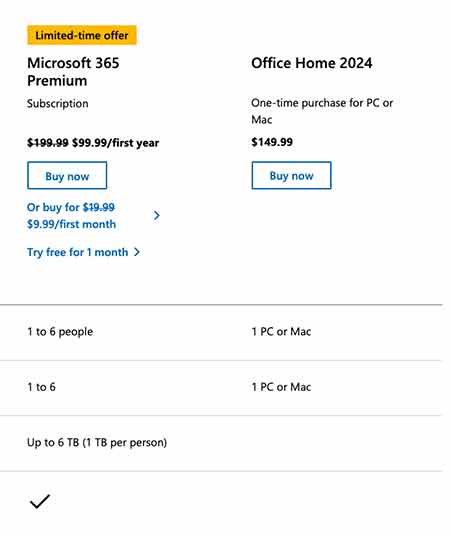
Take Microsoft 365 Personal as a clear example. The subscription costs $99.99 per year. Yet anyone who has followed the evolution of Office knows that meaningful new features tend to appear only every five years or so. Over that five-year period, the subscription will have cost you $499.95.
Microsoft does, fortunately, still leave the door open to a more rational choice: buying a standalone version of its software. Office Home 2024, the most recent release, can be purchased outright for $149.99. Over five years, that represents a savings of $349.96, hardly an insignificant amount.
At present, the main limitation of the Home version is the absence of Copilot. In practice, Microsoft Copilot remains more of a novelty than a necessity. It offers limited real value today, though it is possible that the project could eventually mature into a truly useful companion to the Office suite. It is equally possible that it will be sidelined or abandoned in favor of another technology altogether. The AI landscape is expanding at breakneck speed, and what is fashionable today may be obsolete tomorrow.
You also forgo cloud storage with the standalone version. Here again, that may be a blessing in disguise. Building a mirrored RAID system at home is often a wiser long-term solution than entrusting your data to remote servers at premium prices. A NAS configured in mirror mode allows you to safeguard all your data securely, while still giving you access from anywhere in the world—provided it is connected via Ethernet to your fiber provider’s network.
Run the numbers over the years you would otherwise spend renting storage space from Apple or Google, and the investment in your own infrastructure quickly pays for itself.
In today’s increasingly dematerialized world, consumers are rarely the winners. Subscription models promise convenience, but they quietly drain resources over time. It is worth pausing to think carefully, and critically, about where your real needs begin and end.